Why Custom Beachwear Is Worth the Investment
Off-the-shelf beachwear is everywhere. Custom beachwear is a brand. When a customer picks up a fishing shirt or a pair of board shorts bearing your label, the product itself becomes the billboard — and the design is the message.
Custom beachwear gives you control over every detail that shapes how a customer perceives your brand: the colorway, the fit silhouette, the fabric feel, the placement of your logo, the story the product tells at a glance. That control is impossible to achieve by slapping your name on a generic wholesale garment.
The good news is that the barrier to entry has never been lower. Suppliers like Domy Beach (Yiwu Domy Garment Co., Ltd.) accept custom beachwear orders from 100 pieces, offer free 24-hour design support, and cover fishing shirts, board shorts, and beach cover-ups under the same roof as hats and bags — so your entire collection stays visually coherent without managing separate factory relationships.
Know Your Product Before You Brief Anyone
The most common mistake in custom beachwear development is jumping straight into communication with a factory before the buyer has made the core product decisions internally. A supplier cannot design for you — they can only execute on clarity. The clearer your answers to the following questions, the faster and cheaper the development process will be.
Who is this garment for? Gender, age range, lifestyle context (competitive fishing, resort vacation, daily beach life), and price sensitivity all shape every design decision that follows. A UPF 50+ technical fishing shirt for serious anglers demands different fabric, cut, and branding than a casual linen beach shirt for resort retail.
What is the primary function? Beachwear divides broadly into performance (moisture-wicking, UV-protective, quick-dry) and lifestyle (comfortable, stylish, Instagram-worthy). These categories are not mutually exclusive, but your product should lean clearly toward one — because that determines fabric selection, construction priorities, and how you write the product description.
What is your target retail price? Work backwards. If you want a retail price of $45 for a board short, your landed cost needs to sit at $9–$12 to support a viable wholesale or DTC margin. That ceiling constrains your fabric budget, decoration complexity, and packaging choices. Define it before design begins.
What volume do you expect to sell in the first season? This drives MOQ decisions and affects whether custom fabric development (which typically requires 300+ meters minimum) is feasible, or whether you should work from a supplier’s existing fabric library.
The Four Core Design Decisions
Once you know your product, four decisions determine everything else about how it looks and performs.
Fabric selection
Fabric is the most consequential decision in beachwear design, yet it gets less attention than color or print. For performance beachwear, the dominant fabric families are:
Polyester and polyester blends remain the workhorse of technical beachwear. A 100% recycled polyester (RPET) quick-dry fabric at 150–180 GSM is the standard for board shorts; 100% polyester with UPF 50+ treatment is the baseline for fishing shirts. These fabrics hold print well, dry in minutes, and cost-effectively hit the $5–9 ex-factory price range for a fully custom garment.
Nylon offers superior stretch recovery and a softer hand feel compared to polyester, making it the premium choice for swim-integrated shorts and athletic-cut garments. The trade-off is a roughly 20–30% higher fabric cost.
Linen and cotton-linen blends serve the lifestyle end of the market — resort cover-ups, casual beach shirts, oversized shorts with a relaxed silhouette. These fabrics breathe beautifully but are not performance materials; they wrinkle, dry slowly, and do not hold UPF coatings well.
Recycled and certified fabrics are increasingly expected in the U.S. market. GRS-certified RPET and OEKO-TEX 100-certified fabrics add modest cost ($0.30–$0.80/meter premium) but significantly strengthen the sustainability story that premium U.S. beach brands now sell on.
Silhouette and fit
The silhouette is your product’s handwriting. It communicates the brand’s aesthetic vocabulary before any logo is read.
For board shorts: inseam length (7-inch vs 9-inch vs 11-inch) is the most commercially important measurement, with 7-inch dominating the younger, fashion-forward segment and 9–11-inch dominating the lifestyle/family segment. Waist construction (elastic-only, drawstring-only, or hybrid) and the presence or absence of a mesh liner distinguish product tiers. Define these before briefing a factory, because changing them after a sample has been cut is expensive.
For fishing shirts: the key parameters are sleeve style (long-sleeve vs short-sleeve vs convertible roll-tab), collar style (button-down vs spread vs mock neck), venting (back vent, underarm gussets), and chest pocket placement. Technical fishing shirts typically feature two chest pockets, rod holder loops, and underarm ventilation; lifestyle fishing shirts simplify toward one pocket and clean lines.
Fit terminology must be explicit in your brief. “Regular fit” means different things in Guangdong and in Dallas. Provide a measurement spec or reference a widely available competitor garment with your target silhouette.
Print and color
Beachwear is a color-first category. The print and colorway are what stops the scroll on Instagram and stops the customer on the shop floor.
All-over sublimation printing is the defining technique of the premium board short market. It allows photographic-quality, full-coverage artwork on polyester fabrics with no hand feel change and excellent wash durability. Sublimation is cost-effective at scale (the setup cost is amortized quickly), but requires 100% polyester or high-polyester blend fabrics — it does not work on cotton.
Panel printing places designed fabric panels only on visible areas (front body, back yoke, sleeves), keeping the rest in solid fabric. This is a cost-effective middle ground that creates a premium visual impact at a lower production cost than full sublimation.
Logo-only decoration — embroidery or heat transfer on a solid or stripe fabric — is the fastest, cheapest path to a branded garment. It is not a design statement; it is a branded commodity. Appropriate for first orders and low-price-point products, but not for brands whose identity depends on product distinctiveness.
For color selection on solid or panel designs, provide Pantone references. “Ocean blue” will be interpreted differently by every factory on the planet. PMS 7694 C is not.
Branding placement
Logo placement on beachwear follows conventions that are worth understanding before you break them intentionally.
On fishing shirts: left chest is the primary logo position (consistent with business casual convention). Back yoke or back collar is a secondary brand touch. Sleeve placement communicates a sporty or athletic brand register.
On board shorts: the standard positions are the left hip exterior or the waistband label. A woven patch on the left hip is a premium signal. A printed rubber badge at the hem reads younger and sportier.
The waistband interior label and hang tag are underutilized brand touchpoints. A well-designed hang tag with brand story, care instructions, and UPF certification reinforces the quality perception at the point of sale and gives DTC brands something to photograph.
The Design Brief: What to Send Your Factory
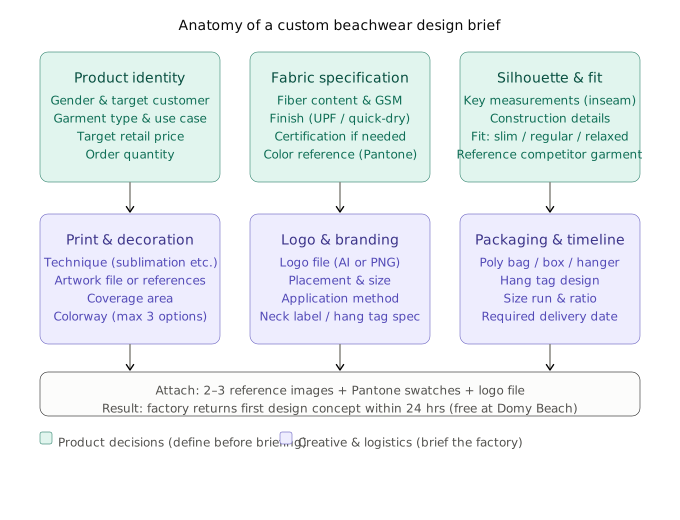
A well-structured brief eliminates the back-and-forth that drags development cycles out by weeks. The six components above — product identity, fabric spec, silhouette, print/decoration, branding, and packaging/timeline — constitute a complete brief. With these in hand, a factory like Domy Beach can return a first design concept within 24 hours at no cost, and a physical sample within 7–15 business days.
One practical note on reference images: send three. One image that represents the silhouette you want. One that represents the colorway or print direction. One that represents the branding register. Three targeted images eliminate more ambiguity than a three-page written description.
Materials, Construction, and Quality Details That Actually Matter
Buyers often over-invest attention in the visible design and under-invest in the construction details that determine whether a garment holds up for two seasons or falls apart after four washes. A few specifics worth specifying in your brief:
Seam type. Flatlock seaming is the technical standard for board shorts and performance shirts — it lies flat against the skin, eliminates chafing, and is the visible marker of a quality swim garment. Overlocked seaming is faster and cheaper but reads as lower quality to an informed customer. Specify flatlock if you want it; don’t assume it’s the default.
Waistband construction in board shorts. A full elastic waistband with a drawstring threaded through is the standard. Premium construction adds an internal mesh brief. The drawstring tipping (the plastic or metal end piece) is a small detail that customers notice; cheap tipping frays and communicates low quality. Specify your preference.
Hem finish on shirts. A curved hem (longer at the back than the front) reads as a beach shirt designed for untucked wear. A straight hem reads as a more formal garment. This is a silhouette decision, not a style detail.
Thread color. Contrast stitching is a deliberate design choice that communicates premium workmanship when done intentionally (tonal contrast stitching on a natural-fabric shirt, for example) and carelessness when it results from a factory defaulting to the cheapest available thread. Specify thread color.
Label placement and content. The U.S. market requires care labels that include fiber content percentage, country of origin, and care instructions in English. A reputable factory will know this, but verify that your product documents comply before the first shipment. Mislabeled products can be detained at customs.
Working with Domy Beach on Custom Beachwear
Domy Beach sources and produces custom fishing shirts, board shorts, and beach cover-ups alongside its straw hat and beach bag lines — making it one of the few Yiwu-based suppliers that can genuinely build out a full beachwear collection from a single relationship.
The practical process: submit your brief (using the six-component framework above) via domybeach.com or WhatsApp. A dedicated English-speaking account manager responds within 24 hours with design concepts. Once the artwork is approved, sample production takes 7–15 business days and costs $100–$300, credited in full against your first bulk order. Bulk production runs 3–5 weeks. All product categories — hats, bags, and apparel — can be consolidated into a single freight shipment, which simplifies customs clearance and reduces per-unit logistics cost.
MOQ for custom beachwear starts at 100 pieces per style, with size mixing (S through XL) counting toward the combined minimum.
The Design-to-Delivery Timeline
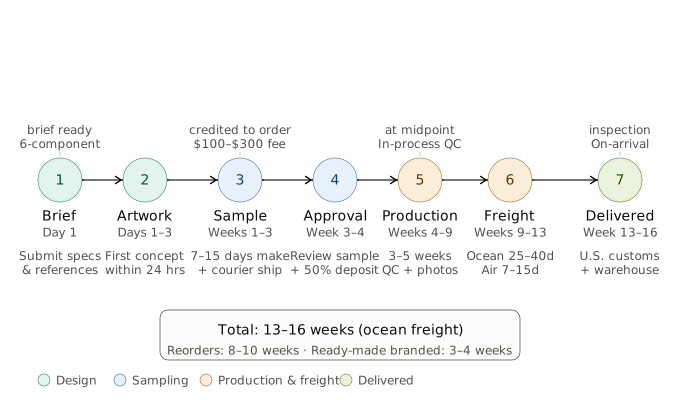
The timeline above is the most important planning tool in this guide. Its central implication: if you want custom beachwear on shelves by Memorial Day, your brief needs to be submitted no later than the first week of February. If your target is the Fourth of July selling window, late February is the outer limit. Buyers who start in April are not ordering custom beachwear for summer — they are ordering it for fall.
For brands that discover they’ve missed the custom development window, the ready-made branded path (selecting existing styles from Domy Beach’s catalog and adding logo branding) compresses the timeline to 3–4 weeks door-to-door via air freight. It is not a substitute for a distinctive custom collection, but it is a legitimate bridge strategy that keeps product in stock while the custom range develops in parallel.
Three Mistakes to Avoid
Specifying design before specifying function. Color and print decisions should follow fabric and fit decisions, not precede them. A beautifully designed board short on the wrong fabric will disappoint customers and generate returns regardless of how good it looks on a hanger.
Skipping the size specification. Submitting a brief without a measurement spec or fit reference garment is the single most reliable way to receive a sample that is cut to Chinese domestic sizing rather than U.S. market sizing. U.S. consumers run larger across all size categories than the default assumption at most Chinese factories. Specify your target measurements, or reference a U.S. retail competitor garment explicitly.
Treating the first sample as the final product. The first physical sample is a conversation, not a deliverable. Expect one to two rounds of revision. The revision round is where the brief’s written specs are validated against physical reality — measurements checked, colors compared under natural light, construction examined. Document your feedback in writing. Verbal revision requests generate confusion; written revision lists generate correct production.
Designing custom beachwear is a sequence of decisions, not a single creative act. Make the functional decisions first (who, what, at what price). Then make the design decisions (fabric, silhouette, print, branding). Then write a complete six-component brief and submit it with three reference images and your logo file.
A competent factory partner like Domy Beach turns a complete brief into a design concept in 24 hours and a physical sample in 7–15 days. From there, the path to your U.S. warehouse is 13–16 weeks by ocean freight. Plan accordingly, specify precisely, and the process is straightforward.
Designing Custom Beachwear FAQ
Q1. How much does it cost to develop a custom beach product line from scratch?
For a first custom beachwear order of 100–150 pieces across one or two styles (e.g., a fishing shirt and a board short), expect a sample fee of $100–$300 per style, an ex-factory unit price of $5–$14 depending on fabric and decoration, plus freight and duties. A realistic total investment for a first custom collection lands between $1,200 and $2,800 landed in the U.S. The sample fee is credited against your first bulk order at Domy Beach, so the net cost of development is effectively absorbed once you proceed to production.
Q2. Do I need to know how to sew or have a fashion design background to create custom beachwear?
No. The factory’s design and pattern-making team handles the technical execution. What you need to provide is clear creative direction: reference images, fabric preferences, fit description, and branding requirements. Most successful first-time beachwear brand founders have no formal design training — they simply communicate what they want clearly, using the six-component brief framework, and let the supplier’s technical team translate that into a manufacturable garment.
Q3. What’s the difference between OEM and ODM for beachwear, and which should I choose?
OEM (Original Equipment Manufacturing) means you provide the design and the factory manufactures to your exact specification. ODM (Original Design Manufacturing) means you select and modify from the factory’s existing design library. For a first-time beachwear brand without an in-house designer, an ODM-first approach — choosing a base silhouette from the supplier’s catalog and customizing the fabric, print, and branding — is faster, cheaper, and lower-risk than full OEM development from a blank page.
Q4. How many colorways or design variations should I launch with in my first collection?
For a first beachwear launch, two to three colorways of a single core style is the right scope. Launching five or six colorways simultaneously multiplies your sample evaluation workload, splits your MOQ across more SKUs, and dilutes your marketing focus. Prove the silhouette works commercially with a tight colorway range, then expand variations once you have sell-through data.
Q5. Can I order a small test batch before committing to my full design?
Yes. Most suppliers, including Domy Beach, allow you to order a single physical sample (not a full bulk minimum) for design and quality evaluation before any bulk commitment. Some buyers also negotiate a reduced “pilot” production run of 50–80% of the standard MOQ for genuinely new, unproven styles — though this typically carries a modest per-unit price premium since it doesn’t allow the factory to optimize material cutting at full volume.
Q6. What’s the minimum order quantity for custom beachwear, and can it be split across colors?
At Domy Beach, custom beachwear MOQ starts at 100 pieces per style. This quantity can typically be split across 2–3 colorways of the same design and across a standard size run (S–XL), as long as the total reaches the style minimum. Splitting across genuinely different silhouettes (e.g., a board short and a separate shirt design) generally requires each style to independently meet the MOQ.
Q7. How do I make sure the fit will work for U.S. body sizing, not Chinese domestic sizing?
Provide explicit target measurements in your brief — chest, waist, inseam, and key circumference points — rather than relying on generic size labels like “Medium.” If you don’t have your own size chart, reference a specific, well-known U.S. retail competitor garment and ask the factory to match its grading. Always request the size specification sheet (spec sheet) back from the factory before sample production, and verify the sample’s actual measurements with a tape measure against that sheet.
Q8. What’s the best fabric for hot, humid climates versus drier beach destinations?
For hot, humid markets (Gulf Coast, Florida, Southeast Asia resorts), prioritize moisture-wicking polyester or nylon blends with mesh ventilation panels and quick-dry treatment — trapped moisture is the primary comfort complaint in humid conditions. For drier climates (Southern California, Mediterranean-style markets), natural fiber blends like cotton-linen perform well since evaporative cooling is more effective and breathability matters more than moisture transport speed.
Q9. Is all-over sublimation printing durable, or will it fade after repeated washing and sun exposure?
Quality sublimation printing on 100% polyester is highly durable — the dye is infused into the fiber itself rather than sitting on the surface, so it resists cracking, peeling, and fading far better than screen printing. However, durability depends heavily on the base fabric quality and the factory’s printing equipment calibration. Always test a sample through at least 5–10 wash cycles and direct sun exposure before finalizing a bulk order, particularly for darker, more saturated colorways which show fading more visibly than pastels.
Q10. Can I get my custom beachwear designs protected from being copied by competitors who use the same factory?
Sign an NDA with your supplier before sharing artwork and specifications — reputable factories, including Domy Beach, will sign without hesitation. Beyond contractual protection, register your distinctive logo and any unique design elements as trademarks with the USPTO, since this gives you actual legal recourse domestically. Be cautious about how much of your design roadmap you share on a first order; build a longer track record with a supplier before discussing multi-season strategy.
Q11. What certifications should I ask about if I want to market my beachwear as eco-friendly or sustainable?
The most relevant certifications are GRS (Global Recycled Standard, for recycled polyester/RPET content claims), OEKO-TEX Standard 100 (confirms the fabric is free of harmful substances), and BSCI (confirms ethical labor practices in manufacturing — not a fabric certification, but increasingly expected by sustainability-conscious retail partners). Request the actual certificate with a current validity date; expired certificates are a common issue.
Q12. How do I know if the UPF rating on my fishing shirts is real, and not just a marketing claim?
A legitimate UPF 50+ claim must be backed by a test report from an accredited lab, typically referencing the AATCC 183 test method (the U.S. standard). Ask your supplier for the specific test report number and the testing lab’s name before using a UPF claim on your packaging or marketing. Don’t accept a verbal assurance — UPF performance varies by fabric weave density, color, and finish, so the same-looking fabric from a different batch may not actually meet the rating without verified testing.
Q13. What packaging options exist for custom beachwear, and how much do they add to my landed cost?
Standard options include an individual poly bag with a printed hang tag ($0.15–$0.40/unit), a printed cardboard box for premium positioning ($0.50–$1.50/unit), and a branded paper insert or care card ($0.10–$0.25/unit). For most DTC and wholesale beachwear brands, a polybag with a well-designed hang tag is sufficient — boxed packaging is generally reserved for gift-positioned products or premium retail accounts that specifically request it.
Q14. How long should I expect a design revision cycle to take, and how many rounds are normal?
Most beachwear development requires one to two rounds of revision between the first design concept and final sample approval. Each revision round — submitting feedback and receiving an updated mockup or adjusted sample — typically takes 2–5 business days for artwork-stage changes and 7–10 business days if a new physical sample needs to be produced. Three or more rounds usually signals that the initial brief was not specific enough; tightening your reference images and measurements upfront prevents this.
Q15. Can I combine custom beachwear with hats and bags in the same production run and shipment?
Yes, at a one-stop supplier like Domy Beach. Apparel, hats, and bags are produced on different timelines (apparel typically takes longer than hats due to cut-and-sew complexity), but a single account manager can coordinate the schedule so that all categories are ready for a consolidated shipment. This is one of the primary advantages of working with a full-category supplier rather than separate apparel-only and accessory-only factories.
Q16. What’s a realistic retail price I should target for a custom UPF 50+ fishing shirt?
Given a typical landed cost of $9–$16 per unit (factoring fabric, decoration, freight, and duties), a wholesale price of $28–$45 and a DTC retail price of $45–$70 are commercially realistic for a branded, UPF-certified fishing shirt, consistent with the positioning of established fishing apparel brands in the U.S. market. Premium fabric, sublimation printing, and technical features (vents, rod loops) support the higher end of that range.
Q17. Should I worry about minimum fabric order quantities if I want a custom print or color that isn’t in the factory’s existing library?
Custom fabric development (dyeing a new base color or running a new sublimation print pattern) typically requires a minimum fabric order of 200–500 meters, depending on the mill. This is usually sufficient for a garment order of 150–400 pieces, so it rarely becomes a blocking constraint for a typical first or second beachwear order. If your target quantity is smaller than that, working from the factory’s existing fabric and color library (and applying your branding via printing or embroidery) avoids the fabric minimum issue entirely.
Q18. What happens if my finished beachwear sample doesn’t match what I approved in the design artwork?
Document the specific discrepancies in writing — measurements, color, construction details — and request a corrected sample before approving bulk production. This is precisely why the sample stage exists, and a professional supplier expects and budgets for one to two correction rounds. Never approve bulk production based on artwork alone if a physical sample reveals meaningful deviations; the bulk order will replicate whatever the approved physical sample shows, not what the original artwork depicted.
Q19. How far in advance should I start designing beachwear for a summer launch?
Begin the design brief and supplier outreach four to five months ahead of your target shelf date. Working backward from a Memorial Day launch: submit your brief by early February, approve your sample by early March, confirm bulk production by mid-March, and rely on ocean freight arriving by early-to-mid May with a buffer for customs clearance. Compressing this timeline is possible with air freight and an already-approved style, but a brand-new custom design needs the full runway.
Q20. Is it better to design one hero product extremely well, or launch a broader range with less depth on each piece?
For a new beachwear brand, one hero product designed and executed extremely well consistently outperforms a broad range of mediocre pieces — both commercially and in terms of managing your sourcing relationship. A single standout fishing shirt or board short with a genuinely distinctive print, a well-fitted silhouette, and quality construction builds the brand credibility that makes every subsequent product easier to sell. Expand the range once that hero product has proven itself with real sell-through data.