Why Custom Beach Accessories Define the Modern Resort Experience
Walk into a well-branded beach resort and the experience announces itself before a single word is spoken. The straw hat resting on the bed at check-in. The oversized tote bag waiting at the pool bar. The embroidered fishing shirt the water sports instructor wears. Every one of these objects is a brand touchpoint — a physical embodiment of what the property promises its guests.
Hospitality lives and dies by sensory consistency. Guests rarely articulate why one resort feels premium and another feels generic, but the answer is almost always in the details: the quality of the branded objects that surround them from check-in to checkout. A scratchy beach towel or a flimsy tote with a crooked logo doesn’t just disappoint in isolation — it erodes the premium perception that the architecture, the service team, and the food program spent months building.
For procurement teams, purchasing managers, and guest experience directors responsible for these decisions, the challenge is threefold: source products that look and feel genuinely premium at the quality level guests expect; brand them in a way that is elegant rather than promotional; and execute the program at the pricing and MOQ levels that make sense for your property’s volume.
This guide addresses all three. It profiles the ten most commercially valuable custom beach accessories for hotels and resorts, provides detailed procurement specifications for each, and maps the considerations that separate a forgettable amenity program from one that guests photograph, keep, and talk about long after checkout.
Throughout, we reference Domy Beach (Yiwu Domy Garment Co., Ltd., domybeach.com) — a one-stop beach product supplier in Yiwu, China with full-category custom capability: straw hats, beach bags, fishing shirts, board shorts, and accessories. MOQ from 50 pcs (ready-made) and 100 pcs (custom). Free 24-hour design service. All categories consolidated into a single shipment.
How Hospitality Beach Merchandise Differs from Retail Merchandise
The procurement frameworks that work for retail beach brands do not map cleanly onto hospitality buying. Understanding the differences is essential before evaluating any specific accessory category.
Experience Over Impression
Retail merchandise is evaluated at the point of purchase, on a shelf or product page, against competitor alternatives. Hospitality merchandise is evaluated in the context of the total guest experience — surrounded by the property’s service, design, and food program. This context amplifies both positive and negative quality signals. A $6 canvas tote that reads as acceptable in a gift shop reads as inadequate in a luxury resort room where the bedding costs $300 per night. The quality threshold for any hospitality amenity must be calibrated against the overall positioning of the property, not against the category average.
Three Distinct Use Cases in One Program
Most resort beach accessory programs serve three functionally different purposes simultaneously, and the product decisions for each are different:
Guest amenities: Complimentary items provided at check-in, at turndown, or at the pool and beach. These must feel like gifts, not promotional products. Quality and presentation are paramount. They also represent a branding opportunity: a hat or tote that a guest takes home and uses becomes organic advertising.
Gift shop retail: Products sold in the property’s retail space. These must justify a premium price point (typically 2.5–4× landed cost) while reinforcing brand identity. Design must be something a guest would be proud to wear or use outside the property context.
Staff uniforms and operational items: Products used by the beach team, water sports staff, and pool attendants. These prioritize durability, function, and brand consistency over guest-facing aesthetics. They must survive commercial laundering, sun exposure, and daily hard use.
The mistake most properties make is applying a single procurement standard across all three use cases. An amenity item needs different spec decisions than an operational item, even when they appear to be the same product category (e.g., a hat).
The Brand Touchpoint Hierarchy
Not all beach accessories carry equal brand weight. Items that guests touch, wear, or take home compound brand exposure significantly more than items that stay on property. The most valuable touchpoints are, in descending order of brand leverage:
Wearable items guests take home (hats, shirts, board shorts): Maximum brand exposure. Every subsequent use is an impression. Design quality is directly tied to likelihood of continued use.
Carry items guests use during and after their stay (beach totes): High exposure. A well-designed tote travels to the grocery store, the farmers market, the beach at home. The resort logo on a bag used daily generates more impressions than almost any other branded item.
Use items that stay on property (towels, chair accessories): High quality signal during the stay but no residual brand exposure after checkout. Worth investing in for quality perception, but less value as brand carriers.
Consumables and incidentals (sunscreen, flip-flops, small accessories): Low residual value but high perceived thoughtfulness at the moment of delivery. Best executed as part of a curated welcome gift set.
| ◆ The takeaway rule The single most useful heuristic in resort beach accessory procurement: design every guest-facing item as if the guest will take it home and use it for two years. If it wouldn’t survive that scrutiny — in terms of quality, construction, and design — it shouldn’t be in the program. Items that guests keep and use are brand ambassadors. Items that guests leave behind are sunk costs. |
The Top 10: Master Comparison
The table below scores each of the ten accessories across four hospitality use cases, and provides MOQ and landed price reference. Scores are out of 10.
| Accessory | Guest Amenity | Gift Shop Retail | In-Room Welcome | Staff Uniform | MOQ (custom) | Landed Price Range (U.S.) |
| #1 Wide-brim straw hat | ★★★★★ 10 | ★★★★★ 10 | ★★★★☆ 9 | ★★★☆☆ 6 | 100 pcs | $8–$18/unit |
| #2 Branded beach tote bag | ★★★★★ 10 | ★★★★☆ 9 | ★★★★★ 10 | ★★★☆☆ 6 | 100 pcs | $6–$16/unit |
| #3 Custom beach towel | ★★★★☆ 9 | ★★★☆☆ 7 | ★★★★☆ 9 | ★★★★★ 10 | 100 pcs | $7–$22/unit |
| #4 UPF fishing shirt | ★★★★☆ 8 | ★★★★★ 10 | ★★★☆☆ 7 | ★★★★★ 10 | 100 pcs | $11–$22/unit |
| #5 Board shorts / swim | ★★★☆☆ 7 | ★★★★☆ 9 | ★★★☆☆ 7 | ★★★★★ 10 | 100 pcs | $9–$18/unit |
| #6 Bucket hat / visor | ★★★★☆ 9 | ★★★★☆ 8 | ★★★★☆ 8 | ★★★★★ 10 | 50–100 pcs | $6–$14/unit |
| #7 Welcome gift set (bundled) | ★★★★☆ 9 | ★★★☆☆ 7 | ★★★★★ 10 | ★☆☆☆☆ 3 | 50 sets | $18–$55/set |
| #8 Waterproof dry bag | ★★★★☆ 8 | ★★★☆☆ 7 | ★★★☆☆ 7 | ★★★★☆ 8 | 100 pcs | $8–$20/unit |
| #9 Mesh beach bag | ★★★★☆ 8 | ★★★☆☆ 6 | ★★★☆☆ 7 | ★★★★☆ 8 | 50–100 pcs | $4–$9/unit |
| #10 Branded sunhat / visor set | ★★★★☆ 8 | ★★★★☆ 8 | ★★★☆☆ 7 | ★★★★☆ 8 | 100 pcs | $12–$28/set |
Landed price ranges reflect FOB Yiwu pricing + estimated U.S. freight and duties. Actual costs vary by spec, volume, and supplier. MOQs reflect Domy Beach standard terms.
The Top 10 Custom Beach Accessories: Full Profiles
| #1 Wide-Brim Custom Straw Hat — Hospitality Score: 9.8 / 10The single highest-impact branded beach accessory in hospitality |
Why It Earns the Top Position
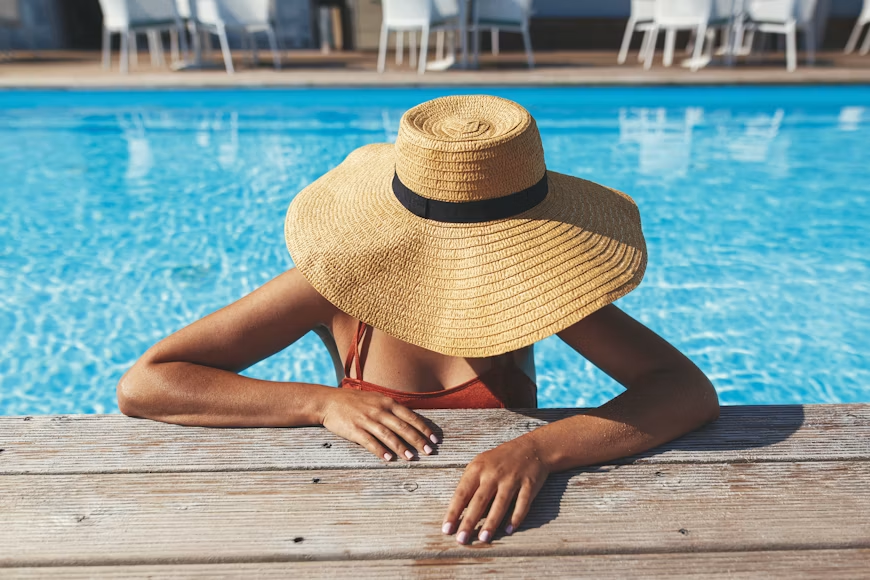
No other beach accessory travels as far from the property as a well-made branded straw hat. A guest who wears your resort’s hat to the farmers market, the beach at home, or the next vacation is delivering an unprompted brand impression to every person who sees them. In social media terms, a hat is a walking post tag: resort photography consistently shows guests wearing property hats long after checkout, generating organic content that no paid media budget can replicate at scale.
The straw hat is also the most universally flattering and occasion-appropriate gift an upscale beach property can offer. Unlike a logoed tote or a branded towel, a beautifully made wide-brim hat carries an inherent luxury signal independent of the logo. It says the property understands how to curate a guest’s experience, not just how to put a logo on something.
Specification Guide
| Best materials | Natural raffia (premium positioning), paper straw (mid-tier, excellent value), seagrass (textural, artisanal aesthetic). Avoid synthetic straw for luxury positioning. |
| Brim width | 12–14cm for maximum sun protection and visual impact. Narrower brims read as fashion accessories; wider brims read as genuine beach items. |
| Construction | Structured crown with brim stiffener or wire integrated. The brim should hold a gentle curve without drooping — test by wearing and tilting the head. |
| Logo placement | Woven or embroidered band around the crown base. Avoid front-panel placement — subtle side or back placement reads more premium. |
| Interior detail | Custom grosgrain or satin ribbon interior band with property name or crest. This is a high-impact premium detail at minimal cost. |
| UPF certification | UPF 50+ achievable in most natural straw weaves. Include certification on swing tag for guest-facing value communication. |
| Packaging | Individual kraft paper sleeve or fabric dust bag for amenity delivery. Elevates the unboxing experience significantly. |
| MOQ at Domy Beach | 50 pcs (ready-made branded), 100 pcs (full custom design) |
| Ex-factory price range | $5–$12 depending on material grade and decoration complexity |
Procurement Decisions by Use Case
In-room welcome gift: Custom ribbon band + property crest embroidery + individual packaging. Invest in the best material grade the budget allows. This is the item the guest will photograph.
Pool/beach amenity lending: Semi-custom on existing catalog style. Durable construction is the priority over premium materials. A washable paper straw or reinforced natural straw that survives poolside handling outperforms a fragile premium hat that requires replacement.
Gift shop retail: Original design, distinctive colorway, premium material. Price at 3–4× landed cost. The design should be something guests would buy independently of the property association.
| ★ Domy Beach straw hat capability Full catalog of wide-brim hats, fedoras, Panama hats, cowboy straw hats, bucket hats, and lifeguard hats. Custom ribbon bands, interior labels, and embroidered crests available as standard options. MOQ from 50 pcs. Free 24-hour design service. Sample fee credited against first bulk order. |
| #2 Branded Beach Tote Bag — Hospitality Score: 9.6 / 10The highest-ROI brand ambassador in the hospitality accessories category |
Why It Earns the #2 Position
A beautifully designed, well-made beach tote bag is the most versatile brand touchpoint in the hospitality accessory portfolio. Unlike a towel that stays on property or a hat that requires a specific aesthetic match, a tote bag works for virtually every guest, at virtually every price point, and travels to more contexts than almost any other item. It goes from the beach to the grocery store to the office to the airport. Every trip is a brand impression.
The commercial case is equally strong. Branded tote bags are among the most repurchased items in resort gift shops — guests frequently buy multiples as gifts for family and friends, extending the property’s brand reach far beyond the original guest.
Specification Guide
| Material options | Heavyweight canvas (12–16oz) for premium durability; natural raffia or straw weave for resort-aesthetic positioning; cotton-linen blend for softer, lifestyle feel; RPET recycled polyester for sustainability programs. |
| Size | Large format (40–45cm width) for pool/beach use; medium format (35–38cm) for gift shop retail. Oversized bags that genuinely hold two towels, a book, and a water bottle communicate genuine thoughtfulness. |
| Handle specification | Rope handles (nautical, resort-appropriate), leather or vegan leather tab handles (premium), or reinforced cotton webbing (operational durability). Specify box-stitch reinforcement at all attachment points. |
| Base construction | Flat bottom with reinforced base insert for operational bags. Allows the bag to stand on sand without tipping. Critical for any bag intended for pool or beach use. |
| Interior | Waterproof or water-resistant lining for operational use. Inner zip pocket for keys and valuables. Mesh side pockets for water bottles. These functional details separate a considered product from a basic tote. |
| Branding | Embroidered logo for premium/gift tier. Screen print for retail/mid-tier. Woven label for interior branding. Consider a custom pattern or property-specific print for the highest differentiation. |
| Packaging | Rolled and tied with a ribbon for in-room placement, or flat-packed in a branded paper sleeve for gift shop. The presentation format changes the perceived value meaningfully. |
| MOQ at Domy Beach | 50 pcs (catalog style with logo), 100 pcs (full custom design) |
| Ex-factory price range | $3.50–$14 depending on material, size, and construction |
The Three Tote Tiers
Operational/amenity tier ($3.50–$6 ex-factory): Canvas or cotton, standard construction, logo embroidery or print. Used for pool towel distribution, shopping runs, or activity kit carriers. Designed to be durable rather than precious.
Mid-range retail tier ($6–$10 ex-factory): Raffia or premium canvas, rope handles, interior pocket, woven label. Priced in the gift shop at $28–$45. The product the typical satisfied guest will purchase for themselves or as a gift.
Premium amenity/retail tier ($10–$14 ex-factory): Oversized natural straw weave, leather handle tabs, waterproof lining, full custom color palette, branded interior. In-room placement for suite and VIP guests, or retail at $55–$85. The item designed to be photographed and kept indefinitely.
| #3 Custom Branded Beach Towel — Hospitality Score: 9.4 / 10The essential operational backbone and most powerful quality signal in any resort beach program |
Why It Earns #3
The beach towel is the highest-volume branded item at virtually every coastal property. It is also, pound for pound, one of the most commercially efficient quality signals available: guests form immediate and lasting judgments about a property’s standards based on the weight, softness, and absorbency of its towels. An excellent custom towel communicates premium quality before the sun lounger is even unfolded.
Unlike most accessories, towels are primarily operational (they stay on property and cycle through laundry) rather than take-home. This changes the procurement calculus: durability through commercial laundering, color retention after repeated washing, and resistance to fraying and shrinkage matter as much as initial aesthetic quality.
Specification Guide
| Material options | Turkish cotton (500–600 GSM, exceptional softness and absorbency, the luxury standard); Egyptian cotton (similar quality, longer fiber); velour face/terry back (print-receptive surface, excellent for branded designs); microfiber (quick-dry, lighter weight, ideal for active/sports programs). |
| Weight / GSM | Below 400 GSM: thin, feels cheap, appropriate only for disposable or gift-tier use. 400–500 GSM: good operational standard. 500–650 GSM: luxury standard, matches 4-5 star property expectations. |
| Size | Standard beach: 75x150cm. Oversized: 90x180cm or 100x200cm. Oversized signals premium and is strongly preferred for amenity programs. Guest psychology: a towel they can fully wrap in says ‘luxury’; a narrow towel does not. |
| Branding options | Jacquard woven logo (woven directly into the terry fabric, most premium, wash-permanent); embroidery (durable, elegant, traditional); digital print / reactive print (full-color capability, best for custom all-over designs); velour print (screen-print on velour face, photogenic). |
| Color strategy | White or cream body for perceived cleanliness and classic resort aesthetic. A colored or striped border in the property’s brand colors is the most elegant branding approach — visible from a distance on a beach chair. |
| Wash durability | Specify minimum 50 industrial wash cycles without color loss or GSM reduction below 15%. Request test data, not verbal assurance. |
| MOQ (typical) | 100 pcs minimum for custom design. 200–300 pcs for custom woven jacquard logo (mill minimum for jacquard setup). |
| Ex-factory price range | $7–$22 depending on GSM, size, and branding method |
| ⚠ The GSM trap in towel procurement Many buyers specify a GSM without specifying how it is measured. GSM can be inflated through looser weave constructions that feel heavy when dry but thin and inadequate when wet. Always request a wet-weight test alongside the GSM specification, and evaluate sample towels after washing rather than before. A 550 GSM towel that performs like a 400 GSM after washing is one of the most common quality disappointments in hospitality towel procurement. |
| #4 UPF 50+ Custom Fishing Shirt — Hospitality Score: 9.2 / 10The premium gift shop anchor and highest-value staff uniform item in beach and water sports programs |
Why It Earns #4
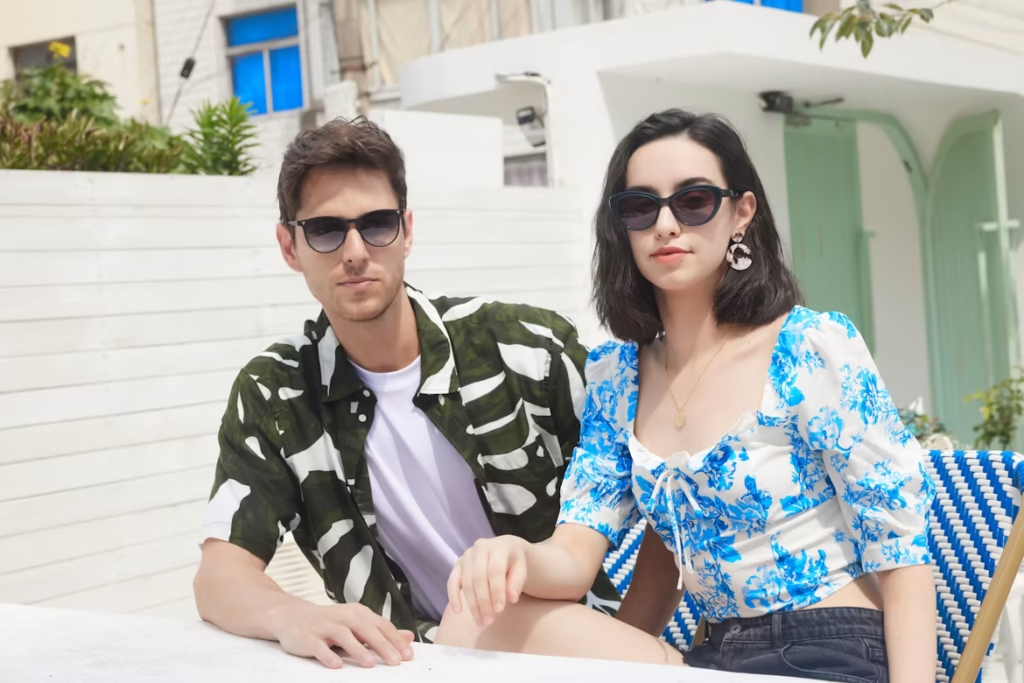
The custom UPF fishing shirt occupies a unique position in the resort accessories portfolio. As a gift shop item, it is typically the highest-priced single product and the one most likely to be purchased by serious guests who identify with an active outdoor lifestyle. As a staff uniform, it communicates professionalism, branded consistency, and the property’s commitment to a complete aesthetic across every touchpoint. And unlike many branded items, a well-designed fishing shirt that a guest purchases is genuinely useful — it provides real sun protection, performs in water, and functions as everyday resort-lifestyle wear long after the vacation ends.
Specification Guide
| Fabric | 100% polyester (quick-dry, color retention, UPF treatment receptive) or nylon-polyester blend (superior drape and stretch). Fabric weight: 140–180 GSM for a clean drape without heaviness. |
| UPF certification | UPF 50+ verified by AATCC 183 test standard. Request test report with lab name and report number. Certification must appear on hang tag and care label for the claim to be commercially defensible. |
| Style options | Long-sleeve (maximum sun protection, premium positioning, fishing/outdoor lifestyle signal); short-sleeve (more casual, wider appeal); roll-tab convertible sleeve (versatile, popular with active guests). |
| Technical features | Underarm ventilation gussets (critical for tropical climates); chest pockets (2 for fishing-positioned styles, 1 for lifestyle styles); back rod-holder loops (fishing specialist programs); moisture-wicking interior finish. |
| Branding approach | Embroidered property crest on left chest for amenity/retail tier. Full sublimation print with property-specific artwork or pattern for premium gift shop and VIP welcome. |
| Staff vs. retail spec | Staff shirts: prioritize durability and easy care over premium fabric feel — commercial laundering resilience. Retail/amenity shirts: prioritize soft hand feel, premium drape, and distinctive design. |
| MOQ at Domy Beach | 100 pcs per style; size mixing S–XXL available |
| Ex-factory price range | $7–$14 for solid color with logo; $10–$18 for sublimation print or specialty fabric |
| ● The fishing shirt price premium opportunity In U.S. beach resort gift shops, branded UPF fishing shirts consistently command retail prices of $65–$120 when the design is distinctive and the brand positioning is clear. At an ex-factory cost of $10–$14, the margin structure on a well-designed fishing shirt is among the most favorable in the resort retail category. The investment is in design — a shirt that looks like something the guest would buy at a specialty outdoor retailer, not something printed with a logo for promotional purposes. |
| #5 Custom Board Shorts & Swim Trunks — Hospitality Score: 8.8 / 10Essential staff uniform items and strong gift shop performers with high perceived value |
Why It Earns #5
Custom board shorts serve the same dual role as fishing shirts — staff uniform and guest retail — but with a broader demographic reach. Where a fishing shirt skews toward an older, active outdoor lifestyle buyer, well-designed board shorts appeal across a wider age range and include the high-volume market of guests who simply want resort-branded swimwear as a vacation memento.
Key Specification Points
Fabric: 100% recycled polyester (RPET) or polyester-spandex blend for stretch and recovery. A 4-way stretch construction dramatically improves comfort and performance ratings from guests.
Inseam length: 7-inch for a younger, fashion-forward positioning; 9–11 inch for a broader, family/lifestyle appeal. For most resort programs, 9-inch is the most commercially versatile.
Lining: Mesh liner is expected at any price point above $50 retail. Its absence signals low quality to an informed buyer.
Drawstring: Specify coated tips (no fraying after repeated washing) and a secure internal elastic backup so the garment functions even if the drawstring is loosened.
Print strategy: All-over sublimation with a property-inspired print (coral, tropical foliage, geometric coastal patterns) commands 40–60% higher retail prices than a logo-on-solid approach and significantly increases gift shop purchase intent.
| MOQ at Domy Beach | 100 pcs per style; size mixing XS–XXXL |
| Ex-factory price range | $6–$10 (solid color, logo print); $9–$15 (all-over sublimation) |
| Retail pricing range | $45–$85 depending on design and fabric specification |
| #6 Custom Bucket Hat & Branded Visor — Hospitality Score: 8.5 / 10The highest-volume, lowest-complexity hat option for staff uniforms and high-frequency distribution |
Why It Earns #6
The bucket hat and visor occupy a different market position than the wide-brim straw hat. Where the straw hat is a statement piece — a premium item with high perceived value — the bucket hat is a workhorse: versatile, durable, unisex, and easy to produce in the quantities that large hotel programs require. For properties with hundreds of beach loungers, a branded bucket hat or visor at each chair, or distributed to guests as standard beach service kit, requires volume and reliability that the straw hat category cannot match at comparable price points.
Key Specification Points
Material: 100% cotton twill (soft, natural, resort-appropriate), nylon (lightweight, quick-dry, appropriate for water sports programs), or UPF-treated polyester (performance positioning).
Construction: Structured brim for a cleaner silhouette. Interior sweatband with moisture-wicking finish. A chin strap or cord is appropriate for water sports and windy environments.
Branding: Embroidered logo (durable, premium signal) or woven patch. Front center placement is standard; side placement reads more fashion-forward.
Colorway: Neutral solids (ecru, navy, sand, white) for broadest guest appeal and brand versatility. Avoid overly loud colors unless the property’s brand identity specifically supports them.
| MOQ at Domy Beach | 50 pcs (catalog style with logo), 100 pcs (custom design) |
| Ex-factory price range | $3.50–$8 depending on material and complexity |
| Best use cases | Staff uniforms (consistency across large teams), pool/beach amenity distribution, water sports programs, high-volume gift shop price-point item |
| #7 Custom Welcome Beach Gift Set — Hospitality Score: 8.8 / 10The highest-impact single branded interaction in the guest journey |
Why It Earns #7
A curated welcome gift set is not a product category in the same sense as the items above — it is a curation strategy. The in-room welcome kit is consistently cited in hospitality guest experience research as the single branded touchpoint with the highest emotional impact on perceived property quality. A thoughtfully assembled set communicates that the property understands its guests, anticipates their needs, and executes details with care.
The commercial case is also strong: guests who receive a well-executed welcome set are measurably more likely to share social media content from the property, leave positive reviews, and return. The incremental cost of a quality welcome set ( 40–$80 at landed cost for a premium set) is one of the most cost-effective guest experience investments a beach resort can make.
Set Composition Guide
Core set (budget $20–35 landed): Custom straw hat or bucket hat + branded canvas tote + care card with property branding. Simple, high-impact, low cost.
Mid-range set ($35–55 landed): Core set + branded quick-dry towel or sarong + property-branded sunscreen or lip balm + branded drawstring pouch. Covers all beach essentials.
Premium set ($55–$110 landed): Premium wide-brim raffia hat + oversized branded tote + luxury beach towel + UPF shirt or cover-up + small luxury amenity (branded candle, silk eye mask, reef-safe sunscreen). Appropriate for suite tier and VIP arrival.
Presentation and Packaging
The container for the gift set is as important as the contents. A branded box with tissue paper and a property card communicates luxury. A loose pile of items in a tote communicates expediency. The most commercially effective format: contents arranged in the branded tote (which becomes part of the gift), tied with a ribbon or secured with a branded tag. The tote is the packaging and the product simultaneously.
| MOQ at Domy Beach | Components sourced individually; set assembly from 50 sets. Mixed-category order consolidated into single shipment. |
| Landed cost range | $18–$110 per set depending on tier and component selection |
| Design service | Free 24-hour design service covers all individual components. Coordinated colorway across hat, bag, and apparel available. |
| #8 Custom Waterproof Dry Bag — Hospitality Score: 8.2 / 10Essential for water sports and adventure programs; strong retail performer in active-lifestyle resorts |
Why It Earns #8
The waterproof dry bag is the workhorse of water-adjacent hospitality programs. For properties with kayaking, snorkeling, paddleboarding, or boat excursion programs, a branded waterproof bag is both a genuinely useful operational item and a natural gift shop product for the active-lifestyle guest segment. It communicates that the property understands outdoor adventure, not just poolside relaxation.
Key Specification Points
Material: 500D PVC tarpaulin (heavy-duty, fully waterproof), or 420D nylon with TPU coating (lighter, softer, more packable). For swimming/submersion contexts, PVC is the correct choice; for rain protection and splash resistance, coated nylon suffices.
Closure: Roll-top with buckle is the waterproof standard. Snap closures and zippers are not fully waterproof without secondary treatment.
Capacity: 5L (personal items, phone, wallet), 10L (mid-use, snorkeling gear), 20L (day pack, full kit). Most resort programs benefit from two sizes.
Branding: Screen print or heat transfer on the exterior. Full-color print is achievable and retains well on PVC surfaces.
| MOQ | 100 pcs for custom branded waterproof bag |
| Ex-factory price range | $5–$14 depending on capacity and material specification |
| Retail pricing range | $25–$65 depending on size and design |
| #9 Custom Mesh Beach Bag — Hospitality Score: 7.8 / 10The most practical daily-use poolside accessory; ideal for high-frequency guest distribution |
Why It Earns #9
The mesh beach bag solves a specific guest problem with unusual efficiency: sand falls through it, wet towels dry inside it, and it can be hosed off without damage. For families, active guests, and any property with a significant pool-to-beach transition, the mesh bag is the most practically useful item in the beach accessories program. It is also among the most affordable to produce, making it viable for high-volume distribution programs where per-unit cost discipline is essential.
Key Specification Points
Material: PE (polyethylene) mesh for maximum durability and UV resistance; nylon mesh for a softer hand feel and lighter weight; cotton rope mesh for a more natural, resort-aesthetic appearance.
Interior: A small zippered interior pocket (for keys, phone, valuables) is the single most requested feature upgrade and adds minimal cost.
Handles: Webbing handles with reinforced attachment points. For premium positioning, rope or macrame handles. Drawstring closure option for poolside security.
Branding: Woven label (most appropriate — a logo tag on the handle is both subtle and durable) or heat-transfer print on a solid panel section.
| MOQ at Domy Beach | 50 pcs (catalog style), 100 pcs (custom) |
| Ex-factory price range | $2.50–$6 depending on construction and detail |
| Best use cases | Pool amenity lending, family program kit item, high-volume distribution at beach access points |
| #10 Custom Sunhat & Visor Matching Set — Hospitality Score: 7.6 / 10A coordinated two-piece set that elevates the guest gift program with minimal additional complexity |
Why It Earns #10
The coordinated sunhat and visor set is a curation device — it takes two individual products and combines them into a single gift that feels more considered than either piece alone. For properties serving couples, the matching set format is particularly effective: it provides one of each item in a single package, implicitly acknowledging that guests arrive as pairs. For resorts targeting the female traveler segment, a curated hat-and-visor combination in a property-consistent colorway is among the most giftable items in the program.
Key Specification Points
Design coherence: Both pieces must share the same material family, the same colorway treatment, and the same branding execution. A raffia wide-brim hat paired with a solid linen visor in the same sand/cream palette creates a coordinated aesthetic without being matchy.
Packaging: The set should be presented as a unit — wrapped together with a branded ribbon or in a branded box. The packaging communicates that the pairing was intentional.
Price positioning: A coordinated two-piece set justifies a higher retail price than either item individually. A hat retailing at $38 and a visor at $22 — combined as a set at $72 rather than $60 — captures a modest bundle premium that most guests accept willingly.
| MOQ | 100 pcs per piece (hat and visor ordered separately, assembled as a set) |
| Ex-factory price range | $8–$18 per set (combined); varies by material |
| Design service | Free colorway coordination across both pieces at Domy Beach |
Building a Complete Resort Beach Accessory Program
The Three-Tier Program Architecture
The most effective hospitality beach accessory programs are structured across three tiers, each serving a distinct commercial and experiential function:
Tier 1 — Operational foundation: Items that support the daily function of the beach and pool operation. Mesh bags for towel distribution. Bucket hats and visors for staff. Operational beach towels. These are procured primarily on durability and per-unit cost efficiency. Branded, but not premium.
Tier 2 — Guest touchpoints: Items encountered by guests as part of the standard service experience. A complimentary bucket hat at pool check-in. A branded tote at beach service. These should be noticeably better than generic alternatives — a quality signal — but not so premium that loss or damage creates meaningful cost exposure.
Tier 3 — Premium amenities and retail: Items that function as brand ambassadors long after the stay. Suite welcome sets. Gift shop flagship items. VIP arrival experiences. These demand the highest quality, the most distinctive design, and the most thoughtful packaging. Per-unit cost is secondary to quality and design impact.
MOQ Strategy for Multi-Property Groups
Multi-property hospitality groups face a specific MOQ optimization challenge: the total quantity across all properties may easily justify premium custom development, but the per-property order might fall below the economic threshold for a single-property buyer.
The solution is centralized procurement with property-specific customization. Centrally source a base product at volume (achieving Band 2 or Band 3 pricing), then apply property-specific branding through a second decoration step. At Domy Beach, this approach is achievable: the same straw hat base procured at 500 units (combined across five properties) receives property-specific ribbon bands or embroidered crests at the second decoration step. The result is brand-consistent across the group while remaining property-distinct in execution.
| ✔ Consolidate freight across all properties For multi-property programs, routing all goods through a single consolidation point (Domy Beach’s Yiwu warehouse) before distributing to properties reduces per-unit freight cost significantly versus shipping individual property orders separately. A 500-unit consolidated order in one FCL container will have per-unit freight costs roughly 40–60% lower than five separate 100-unit LCL shipments. |
Seasonal Planning Calendar
Beach resort accessory programs have distinct seasonal procurement cycles. The planning framework below reflects U.S. coastal resort seasonality, adjusted for China manufacturing lead times:
| Action | Timing (relative to summer season open) |
| Begin supplier outreach and brief submission | 5–6 months before season open (October–November for June open) |
| Sample approval complete | 4 months before (December–January) |
| Bulk order confirmed, deposit paid | 3.5 months before (January–February) |
| Production complete, QC signed off | 2.5 months before (February–March) |
| Ocean freight departure | 2 months before (March–April) |
| U.S. port arrival and customs clearance | 5–6 weeks before (April–May) |
| Distribution to properties | 3–4 weeks before season open |
| Reorder assessment (mid-season) | 4–6 weeks into season |
| Fall/winter collection brief | Start of summer season (June–July) |
Procurement Checklist: What to Specify Before Requesting Quotes
The quality of a supplier quote is directly proportional to the completeness of the brief that generates it. The following checklist covers every specification decision that a hospitality procurement team should resolve internally before approaching any supplier.
Brand and Design Specifications
Property brand guidelines — logo files (AI vector preferred), approved Pantone colors, brand typography
Logo placement preferences by product category
Desired aesthetic register: classic resort, contemporary lifestyle, adventure/active, luxury heritage
Color palette restrictions or requirements (some properties prohibit certain colors for brand compliance)
Packaging requirements: branded boxes, ribbon colors, tissue, care cards, hang tags
Product Specifications
Product categories required and their use case (amenity, retail, staff uniform)
Material preferences and any certification requirements (UPF, OEKO-TEX, GRS)
Size requirements: standard sizes, size distribution for apparel, dimensions for bags and towels
Construction details: handle type for bags, brim width for hats, GSM for towels, inseam for shorts
Decoration method preferences by product and tier
Commercial Specifications
Total quantity required per property (and number of properties if multi-property program)
Required delivery date and any hard in-hands deadline
Budget parameters: maximum landed cost per unit by product tier
Reorder frequency expectations (seasonal, annual, as-needed)
Any compliance requirements (BSCI, CPSC, OEKO-TEX) for imported goods
FREQUENTLY ASKED QUESTIONS
Program Strategy & Planning
Q1. How far in advance should a hotel or resort place a custom beach accessory order from China?
For full custom development (new design, sample approval, bulk production, and ocean freight to the U.S.), plan for a 14–18 week door-to-door timeline from first supplier contact to on-property delivery. Working backwards from a June 1st season open, that means starting supplier conversations and submitting your design brief no later than early February — and ideally in November or December to allow buffer for sample revisions. Seasonal calendar pressure is the most common and most expensive mistake in hospitality beach accessory procurement: buyers who start in April for a summer program consistently either miss the season, pay substantial air freight premiums, or accept a ready-made substitute rather than the custom product they planned.
Q2. What is the realistic minimum budget for a complete custom beach accessory program for a 100-room property?
For a 100-room property running a complete program — in-room welcome sets, pool/beach operational items, and gift shop stock — plan a minimum landed budget of $8,000–$18,000 for the initial season, depending on the tier positioning of the property. A breakdown: welcome amenity sets at $35–55 per room ($3,500–$5,500 for 100 rooms), operational bucket hats and mesh bags for beach staff and lending ($800–$1,500), and initial gift shop stock across hats, shirts, and totes ($3,000–$6,000 at cost). Air freight for the program adds $800–$2,000 depending on total cubic volume. This budget level produces a genuinely branded, quality-differentiated program. A credible program can be executed for less by prioritizing ready-made branded items over fully custom development on some categories.
Q3. Should a boutique resort with 20 rooms run a custom accessory program, or is it not viable at that scale?
A 20-room boutique property is absolutely viable for a custom program, particularly with a one-stop supplier like Domy Beach where the MOQ starts at 50 pieces for ready-made branded and 100 pieces for full custom. The strategy: focus the customization investment on one or two hero items (typically the straw hat and the tote bag) where the design differentiation pays the highest brand dividend. Source operational items (towels, bucket hats for staff) as semi-custom ready-made. Total initial investment for a 20-room boutique program with this approach: $2,500–$5,000 landed, fully within the budget range for a property that charges $250+ per night. The per-night guest acquisition cost of a well-executed amenity program is almost always recoverable in improved review scores and repeat booking rates.
Q4. How do we ensure consistent quality across multiple reorders throughout a season?
Consistency across reorders is one of the most underappreciated challenges in hospitality accessory procurement. Three practices protect it: (1) Document the approved production sample in writing, including key dimensions, color references (Pantone numbers, not descriptions), material specifications, and logo placement measurements. This becomes the standing production reference for all future orders of the same product. (2) Request that the factory retain one copy of the approved sample as a physical production reference. (3) For the first reorder, request a pre-production photo showing the setup against the original sample before bulk production commences. These steps add minimal cost or time and prevent the spec drift that causes reorder disappointment.
Q5. What certifications should we require for beach accessories distributed to hotel guests?
The minimum certification requirements depend on what is being distributed and to whom. For all items that contact skin directly (towels, apparel, hats): OEKO-TEX Standard 100 confirms the fabric is free of harmful substances — a reasonable standard for any hospitality context. For UV-protective items (hats, fishing shirts) where UPF claims are made on hangtags or marketing: a UPF test report from an accredited laboratory is mandatory. For items marketed as sustainable or eco-friendly: the relevant certification (GRS for recycled content, GOTS for organic fiber) must be documented and current. BSCI or equivalent labor compliance certification provides due diligence coverage for ethical sourcing claims. Beyond these, U.S. CPSC (Consumer Product Safety Commission) regulations apply to textile products sold or distributed commercially, including care labeling requirements (fiber content, country of origin, care instructions in English).
Product Selection & Customization
Q6. What single beach accessory generates the highest ROI for a hotel or resort brand?
The branded straw hat, when designed well, generates the highest long-term ROI of any beach accessory in the hospitality category. The logic: a $10–15 custom wide-brim raffia hat with embroidered property crest, placed in-room, will be taken home by a significant percentage of guests. Each subsequent use — at another beach, at a farmers market, on a vacation photo — generates a brand impression that cost the property nothing beyond the initial investment. Social media amplifies this further: hats are among the most frequently featured branded items in resort guest photography, and a visually distinctive hat will appear in tagged content long after the stay. The branded beach tote bag runs a close second for the same reason: it travels further and more frequently than virtually any other branded item.
Q7. What’s the difference between a promotional beach hat and an amenity-quality beach hat, and how much more does it cost?
The distinction is primarily in material quality, construction detail, and design intention. A promotional beach hat is designed to carry a logo at minimum per-unit cost: paper straw or synthetic material, standard construction, front-panel logo print, no interior details. At retail, it signals ‘giveaway.’ An amenity-quality beach hat uses natural raffia or high-grade paper straw, a structured crown with brim stiffener, a custom grosgrain interior band, and an embroidered crest placed with restraint. At retail, it signals ‘gift.’ The cost difference is approximately $3–$7 per unit ex-factory. The perceived value difference to the guest is measured in guest satisfaction score points, social media posts, and likelihood of taking the item home. For any property charging above $150 per night, the ROI on the quality upgrade is overwhelmingly positive.
Q8. Can a hotel get all its beach accessories — hat, tote bag, fishing shirt, board shorts, and towel — from a single supplier?
Yes, at a one-stop supplier like Domy Beach, a complete beach accessory collection (straw hat, beach tote, fishing shirt, board shorts, and accessories) can be sourced from a single supplier relationship, with a single account manager, and shipped in a single consolidated freight booking. The operational advantages are significant: coordinated colorways across all product categories (because the same design team develops them together), a single customs entry for the combined shipment, and simplified ongoing reorder management. Towels are the exception — high-volume resort towel programs typically require a specialist towel supplier due to the specific weaving and dyeing requirements. For beach bags, apparel, and hats, full one-stop capability is genuinely achievable.
Q9. How should we decide between in-room welcome gifts vs. gift shop retail for our accessory program?
The two channels serve fundamentally different strategic purposes and should be designed accordingly. In-room welcome gifts are brand experience investments: their purpose is to create an emotional impression, generate social media content, and communicate property values. They should be designed for maximum delight, regardless of whether they would sell well at retail. Gift shop retail items are commercial products: they must justify their price point through design, quality, and perceived value independent of the brand context. A hat that is perfect as a surprise welcome gift (beautiful, luxurious, not priced) may fail as a gift shop product (guests may feel it’s overpriced at $65 if they’ve already received it for free). The strongest programs maintain a distinct design or variation between amenity and retail tiers to prevent this conflict.
Q10. What logo placement and decoration method best fits a luxury resort positioning?
Luxury hospitality branding is characterized by restraint, not prominence. The most effective approaches for premium properties: an embroidered crest (rather than a flat logo) placed on the interior hatband, the underside of a brim, or at the back-left position of a shirt — visible when someone looks closely, not visible from across a pool deck. A woven label inside a hat or tote, with the property name in a refined typeface. A debossed leather patch on a tote’s handle. What to avoid at the luxury tier: large front-panel logo placement, high-contrast color combinations (white logo on black, black on white), oversized logo applications, and any decoration technique that looks like it was optimized for visibility at a trade show booth. The premium signal in luxury amenity branding is that the property was confident enough not to shout its name.
Sourcing, MOQ & Logistics
Q11. What is the minimum viable order quantity for a small boutique hotel that needs custom branded straw hats?
The practical minimum for a fully custom straw hat at Domy Beach is 100 pieces. For a boutique property, 100 pieces provides enough inventory for 1.5–2 full room turnovers (depending on how many hats are placed per room), plus replacement stock for losses and staff use. If 100 pieces exceeds your immediate requirement, the most efficient path is to order a combination of ready-made branded (50 pcs at minimum, fast turnaround, lower cost) for immediate deployment while commissioning a full custom design in parallel for the season’s primary amenity order. This hybrid approach allows you to launch the program immediately without waiting for custom development to complete.
Q12. How do we handle reordering when we run out of a beach accessory mid-season?
Mid-season stockouts are a common and avoidable problem. The prevention: order 20–30% more than your season-opening estimate, accounting for losses (beach items disappear with guests), damages, and higher-than-expected demand. The cure, when stockouts happen anyway: for ready-made styles, a fast reorder via air freight can arrive in 3–4 weeks from an existing catalog style. For custom styles, production must restart from a locked spec, and you face a 6–10 week wait even with an existing approved sample. The practical implication: any item with a fully custom design that cannot easily be substituted should be over-ordered initially. Keep a reorder agreement in place with your supplier, with the spec and tooling held on file, so reactivating production requires only a purchase order rather than a new development cycle.
Q13. Can we get our beach accessories shipped directly to multiple properties from China?
Yes, but the most cost-efficient approach depends on your order structure. For a multi-property group ordering from a single supplier: route all goods to a centralized U.S. distribution point (your corporate warehouse or a third-party logistics provider), clear customs as one combined entry, then distribute to properties domestically. This is almost always more cost-efficient than shipping separately to each property from China, which generates multiple LCL freight bookings, multiple customs entries, and higher per-unit brokerage fees. For properties in different countries (a Caribbean resort group, for example), each country destination should be a separate shipment for customs compliance purposes.
Q14. What happens if the beach accessories arrive and they don’t match what we approved in the sample?
This situation, while undesirable, has a clear resolution path when documentation is in place. First: compare the delivered goods against the written specification and the approved sample, documenting every deviation with photographs and measurements. Classify deviations as critical (the item is fundamentally wrong — wrong material, wrong logo, structurally defective) versus cosmetic (minor color variation, small placement deviation within tolerance). Critical deviations: file a formal written claim with the supplier immediately, citing the spec document and approved sample. A credible supplier, including Domy Beach, will respond with a resolution proposal (replacement production, credit, or partial refund depending on the nature of the issue). Cosmetic deviations: evaluate whether they are within the AQL tolerance specified at order confirmation. Prevention is always preferable: a mid-production inspection (either in-person or via video) catches most deviations before the full run is complete.
Q15. What’s the best way to coordinate a resort beach accessory program with a tight sustainability mandate?
A resort with a genuine sustainability commitment can source a complete beach accessory program that substantiates it, but requires upfront specification discipline. Key choices: specify RPET or GRS-certified recycled materials for bags and apparel; specify organic cotton (GOTS certified) for towels and cotton-based items; request OEKO-TEX Standard 100 for all skin-contact items; source natural straw hats (inherently biodegradable) over synthetic alternatives; and choose water-based or non-toxic inks for any print decoration. Request documentary evidence for every certification — a certificate number and expiry date, not a verbal claim. At Domy Beach, these certified material options are available across the product range; they require specification in the initial brief and may carry modest cost premiums and slightly higher MOQs due to certified material sourcing requirements.
Working with Domy Beach
Q16. Can Domy Beach coordinate a matching colorway across hats, bags, apparel, and accessories for a cohesive resort program?
Yes — this is one of the most commercially valuable capabilities of working with a one-stop supplier. Because Domy Beach’s design team develops all product categories, they can coordinate a shared palette, a shared brand element (a property crest, a signature pattern, a consistent ribbon color), and a consistent material register across the entire program. A resort that wants every element of its beach program — hat, tote, shirt, board short, and accessories — to feel like it was designed as a collection rather than assembled from separate sources achieves this most efficiently through a single supplier. The alternative — briefing a hat supplier separately from a bag supplier separately from an apparel supplier — creates coordination overhead and risks aesthetic fragmentation even with the best brand guidelines.
Q17. What is the sample and approval process at Domy Beach for a hospitality program?
The process is structured to minimize development time and maximize first-sample accuracy: (1) Submit a complete brief (property brand guidelines, product specs, reference images, and target quantities); (2) Domy Beach’s design team returns artwork concepts within 24 hours, free of charge; (3) After artwork approval, physical samples are produced in 7–15 business days and shipped via express courier; (4) The buyer evaluates the physical sample against the brief and provides written approval or specific revision requests; (5) Most hospitality programs complete sample approval in 1–2 rounds; (6) Bulk production begins only after written sample approval — this is a non-negotiable step that protects both parties. Sample fees ($100–$300 per style) are credited against the first bulk order. For multi-product programs, samples across different categories are often produced concurrently to compress the overall development timeline.
Q18. How does Domy Beach handle a hotel group that needs the same base hat with 12 different property-specific embroideries?
Multi-property programs with shared base products and property-specific branding are a well-established procurement model that Domy Beach accommodates. The most efficient structure: order a single base hat style at consolidated volume (all properties combined), delivering volume pricing, then apply property-specific embroideries as a second decoration step. Each property’s embroidered design requires its own one-time digitization setup fee (typically $30–80 per design), after which the embroidery cost per unit is consistent across the program. For 12 properties sharing a base hat style ordered at 600 units combined (50 per property), the property-specific embroidery setup is a minor one-time cost against a program that benefits from the per-unit pricing of a 600-unit order. The same logic applies to custom ribbon bands, woven labels, and other branding elements that can be varied by property on a shared base product.
Q19. Does Domy Beach offer a reorder program so we can replenish beach accessories during the season without starting from scratch?
Yes. For established clients, Domy Beach maintains the approved sample, production specification, and digitized artwork on file, allowing reorders to move directly into production without repeating the development and sample cycle. Reorder lead time for previously approved styles is typically 2–3 weeks (bulk production only) plus freight, versus 10–16 weeks for a new development. For seasonal properties that need mid-season replenishment, we recommend discussing a reorder agreement at the point of the initial order confirmation — specify the expected reorder quantity, timing, and pricing before the first shipment arrives. This allows the factory to reserve material and capacity for the anticipated reorder, reducing lead time and preventing stockouts.
Q20. What’s the single most important thing a hotel purchasing manager should know before ordering custom beach accessories from China for the first time?
The single most important principle: hospitality accessory procurement rewards clarity and punishes vagueness. Every dimension of this guide — the design brief, the material spec, the quality standard, the timeline, the quantity — produces a better outcome when it is defined clearly before the supplier relationship begins. Suppliers can only execute on what they are told. A vague brief produces a generic product. A specific brief — with Pantone color references, precise measurements, defined construction requirements, and a clear quality standard — produces exactly what the property intended. The investment of two to three hours in a complete brief before sending a single inquiry will recover itself many times over in development speed, sample accuracy, and production consistency. Everything else in this guide is a supporting detail. Clarity of specification is the foundation.